Project Information
Location: Anfoeta in the Ho west district
Duration: 12 Months
Focus Area: Sacred forest restoration, Climate resilience agriculture, Livelihood support
Funding/Implementation Partner: Local NGO consortium, District Assembly, Forestry Commission (Ghana), Community Land User Associations, Farmers groups
Project Overview
The Anfoeta Sacred Forest forms part of the Weto Landscape, a world classified bio-diversity hotspot of Global importance, its ecological functions protect the water sources of these communities, protect erosion, source of medicinal plants and habitat for sacred animals, shelter community deities, and a place for rituals and other ceremonies. The sacred grove plays an important role and well-being in the conservation of natural resources to these communities. The outstanding biodiversity features and cultural diversity of the sacred grove are venerable, due to fragmentation and encroachment for agriculture, illegal harvesting of trees and settlements close to the grove are subject to disturbing and degradation that threatens the grove. Greenglobe seek to address the problems associated with resource exploitation and ineffective conservation of this forest ecosystem, and also support and form co-management that integrates traditional knowledge with modern science.
Project Objectives
To promote sustainable management of sacred forest resources with native biodiversity in the project communities.
Promote sustainable use of natural resources of NTFPs to reduce pressure on the sacred forest.
Develop and sustain livelihood enterprises for the wellbeing of the forest resource dependents.
Empower the needed institutional capacity for the integration of conservation and production.
Key Activities Implemented
- Establish tree nursery of 70,000 capacity seedlings of fruits trees, Ofram, Mahogany, Cassia, Acacia in the project area for enrichment planting.
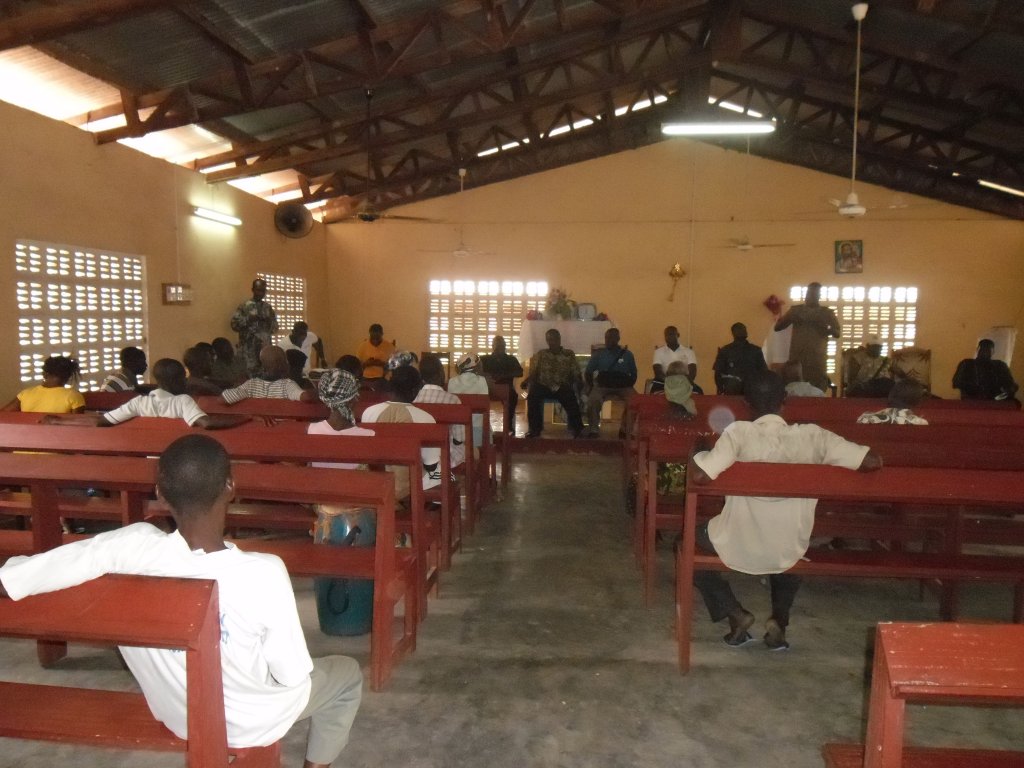
- Community fora and training for community forest management committees, Community school environmental club formed and train on natural resource management.
- Bush fire management, 30 persons trained as fire volunteer squad for fire prevention. Community labour would be used to construct fire belt in specific biodiversity areas.
- The project trained 100 farmers in sustainable agricultural practices including soil fertility management and composting.
- Support livelihood activities in processing of Non-Tree Forest Products (NTFPs) for Forest dependant.
Impact & Results
- 50 hectares of degraded sacred forest land restored through restoration, forest regeneration and mixed agroforestry systems and tree planting on farms.
- 150 farmers trained in climate-smart agriculture practices, organic fertilizer processing
- 10,000 tree seedlings planted with an average survival rate of 80%
- Increased household awareness of sustainable land management practices and livelihood support.
- Bush fires reduced in project communities.
Project Gallery